


Geoffrey Bawa’s Masterpieces: A Road Trip Through Sri Lanka’s Architectural Wonders
Every architect dreams of experiencing the magic of Geoffrey Bawa’s work. When I embarked on my international travel journey, there was only one destination for me to start with – Sri Lanka, the home of the legendary architect himself, Sir Geoffrey Bawa. His stunning creations had long been on my bucket list, and I was eager to witness the brilliance of his designs firsthand.
I had meticulously planned my road trip around Bawa’s work, covering Colombo, Bentota, Galle, and Dambulla. Sri Lanka is already a heavenly beautiful country, and seeing architecture that completely gels with its natural surroundings is a masterpiece in itself.
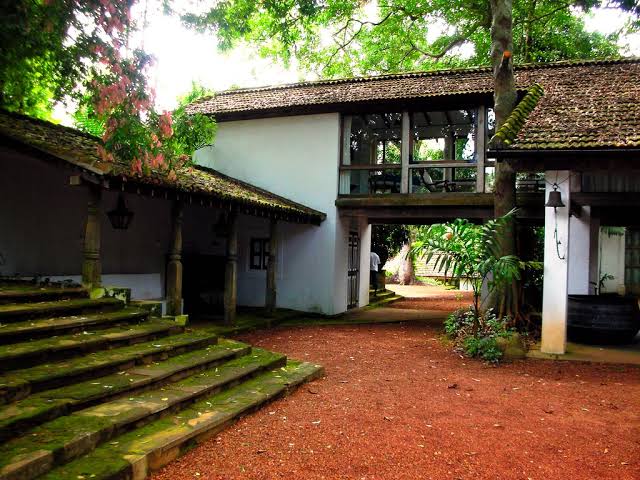
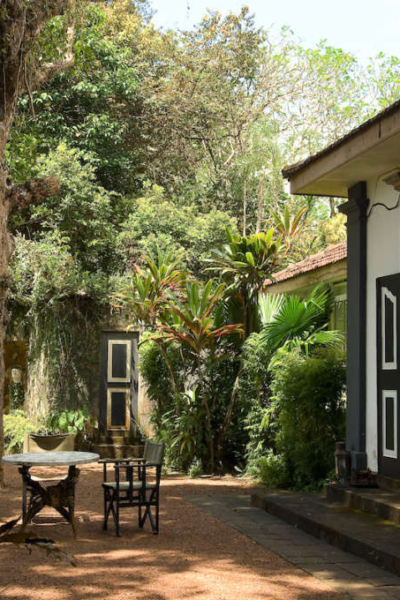
Lunuganga Entrance
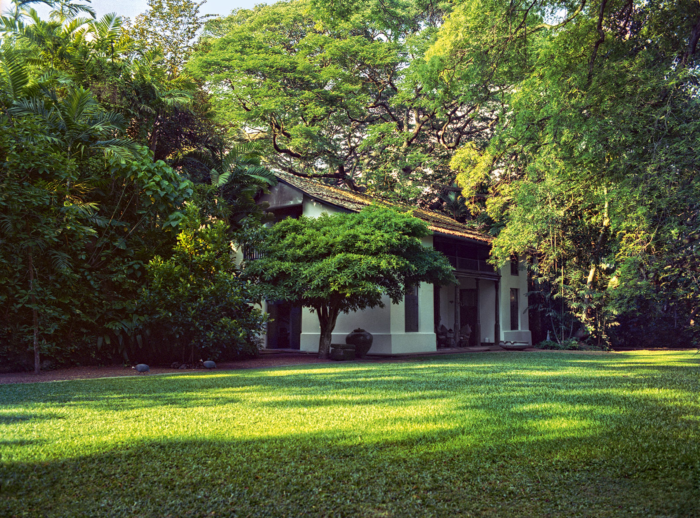
Looking towards the residence
My first stop was Lunuganga, Bawa’s country estate in Bentota, Sri Lanka. Surrounded by forests, entering through a small door led me to the sheer beauty and tranquillity of the place. Lunuganga is a nature lover’s paradise, with incredible diversity ranging from towering palms to delicate orchids spread across 15 acres of lush gardens.
What struck me most was the sense of harmony and balance between the architecture and nature, as if they were in complete unity. One of the most memorable parts of my visit was the opportunity to stay in one of the cottages on the estate. Bawa’s masterful eye for interior design was evident in the open-plan layout that allowed for natural light and ventilation, along with the stunning use of local materials.
The veranda offered stunning views of the gardens, and I could imagine Bawa spending hours on end there, lost in the beauty of his creation.
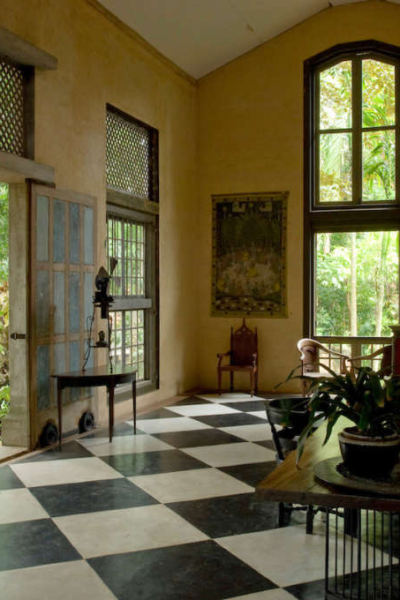
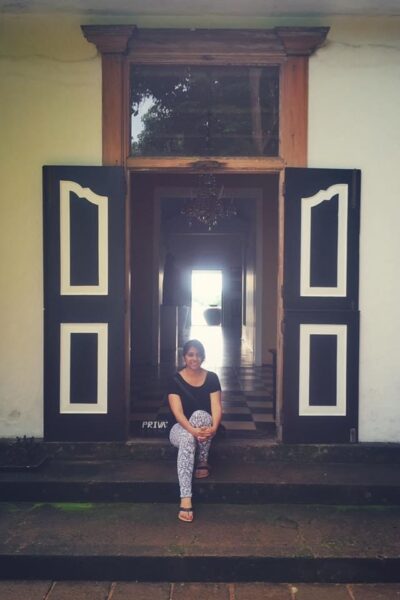
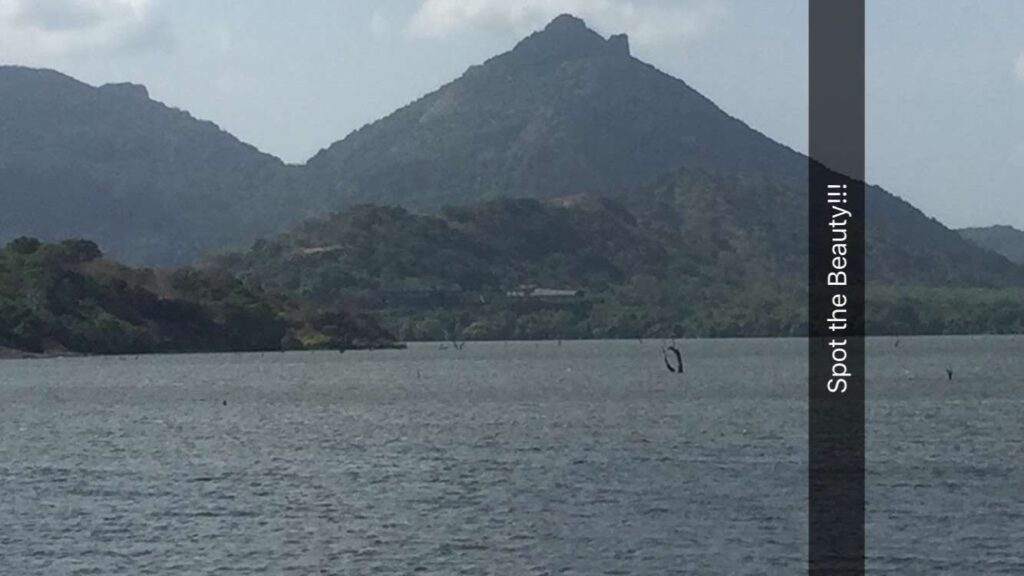
on the way to Heritance Kandalama
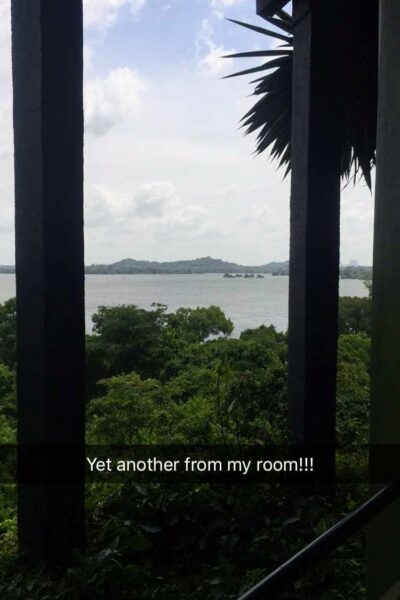
My next stop was the ever-popular Hotel Heritance Kandalama. Spotting the hotel from a distance was a miracle as it is totally camouflaged by lush forests and mountains.
There were strikingly unique features; the use of local materials and techniques, like the traditional technique of wattle and daub and the much talked about infinity pool, which merges effortlessly with the lake and surrounding landsacpe.
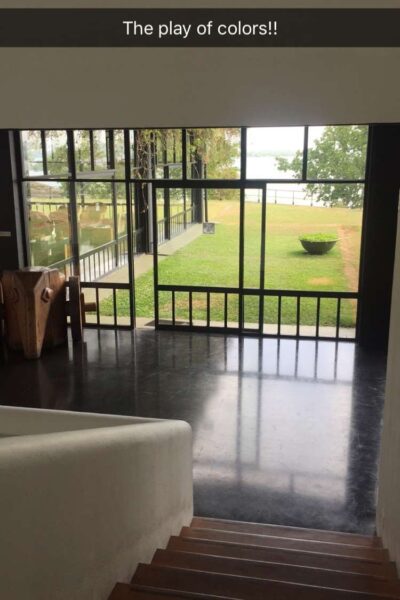
The colour palette chosen for the hotel is a stroke of brilliance, while totally opposite, were in complete sync with the surroundings. The stark contrast between the immense white walls and the never-ending black-tinted concrete floor created a dramatic effect.
It felt as if I had stepped into a different realm, where the boundaries between architecture and nature were beautifully blurred.
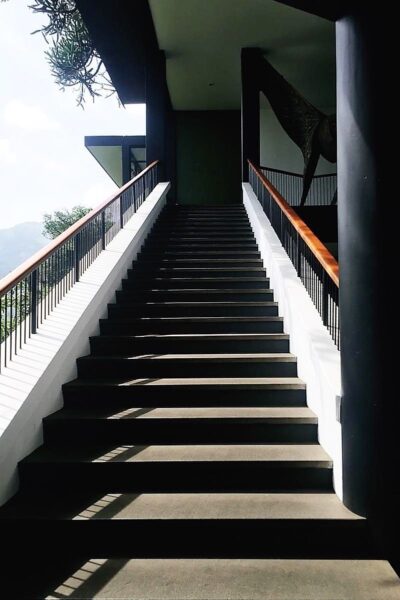
The last work of Bawa that I would love to talk about is Number 11, his house in Colombo which is currently also the head office of Geoffrey Bawa Trust. The work at Number 11 is weirdly in total contrast yet in total sync with his other works that I visited. Number 11 is a two-storey bungalow.
It’s a spatial experience of its own. One cannot see the entire elevation as you’re walking into the house; all you see is a solid wood door with contrasting black colour shaded by a huge tree. But as you walk in, you’re in for a total surprise – it’s all white! The entire house is white, with colours used as accessories – it’s all white! It neither completely works with a straight line nor curves; it’s a mix, and just like all other designs of Bawa, the opposites sit in perfect alignment. The landscape comes in, and the building reaches out to nature.
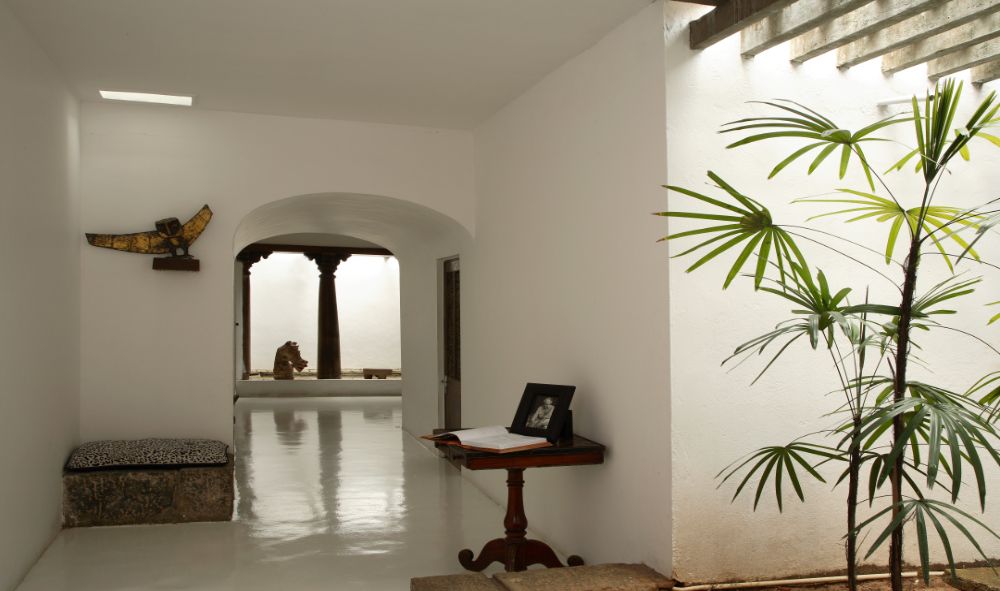
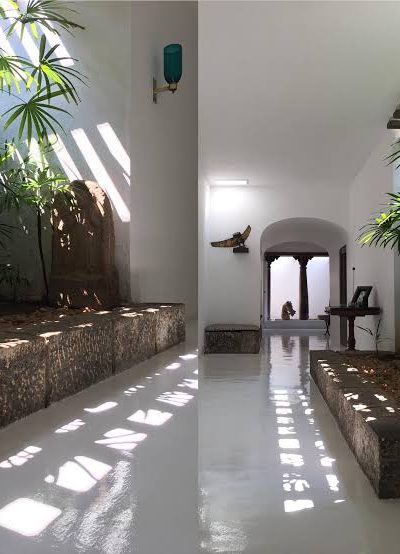
Ground Floor
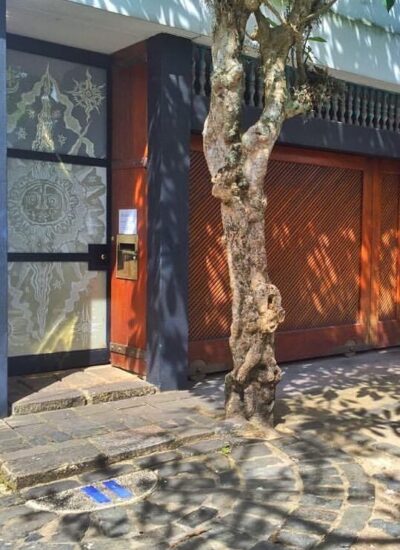
Entrance Gate, Number 11
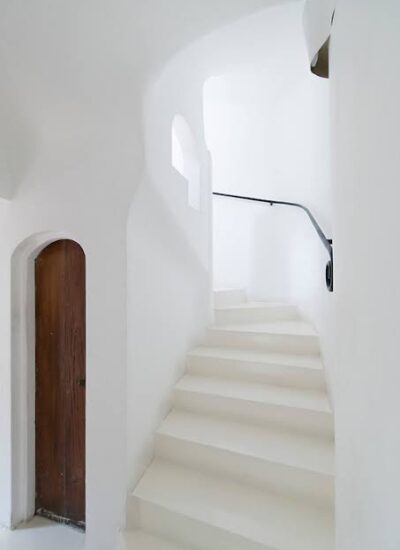
Staircase leading to first floor
There is a carefully curated collection of artworks to the thoughtfully placed furniture, and each element contributes to the overall aesthetic. The integration of traditional Sri Lankan architectural elements, such as verandas, courtyards, and water features, pays homage to the local heritage while embracing modern design principles.
Number 11 stands as a testament to Geoffrey Bawa’s unparalleled talent and his contribution to the world of architecture. Today, it is lovingly preserved by the Geoffrey Bawa Trust, and in Bawa’s world, art, nature, and human habitation harmoniously coexist.
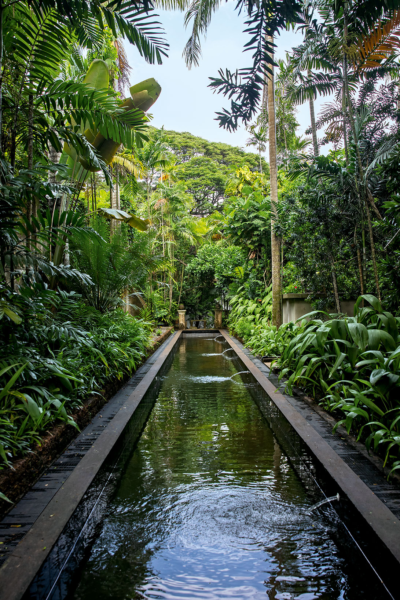
Lunuganga

Infinity Pool, Kandalama

Wandering around Kandalama
Here are four things I learned from his work that I wish to emulate in mine:
- Create architecture that is in harmony with nature and endures over time.
- Push the boundaries of what was
- Design innovation without losing the beauty of simplicity.
- Design architecture that is in tune with its local climate, culture, and heritage.
If you’re ever in Sri Lanka, I highly recommend a visit to his work It’s a truly magical place that will leave you feeling inspired and rejuvenated.


Podii.net
Hey I know this is off topic but I was wondering if you knew of any widgets I could add to my blog that automatically tweet my newest twitter updates.
I’ve been looking for a plug-in like this for quite some time and
was hoping maybe you would have some experience with
something like this. Please let me know if you run into
anything. I truly enjoy reading your blog and I look forward to your new
updates.